This site uses cookies.
Some of these cookies are essential to the operation of the site,
while others help to improve your experience by providing insights into how the site is being used.
For more information, please see the ProZ.com privacy policy.
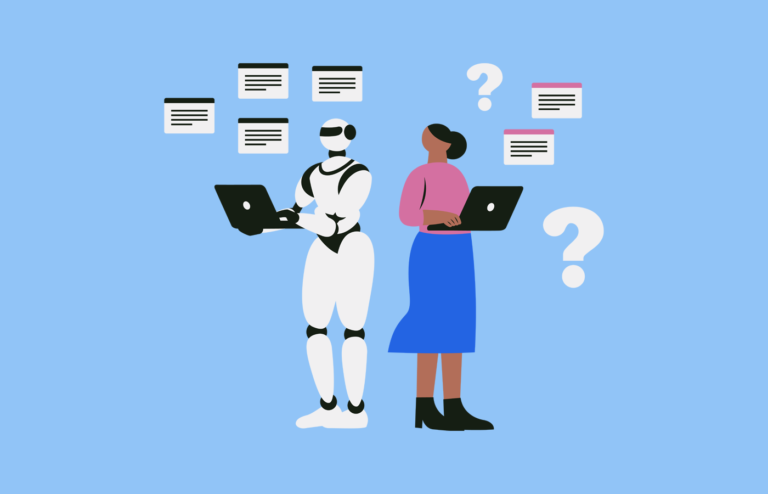
However, with the rise of large language models (LLMs), researchers are questioning whether these advanced AI tools can meet the complex demands of legal translation.
In their recent study, Applying Large Language Models in Legal Translation, Martina Bajčić, Associate Professor at the University of Rijeka, and Dejana Golenko, Assistant Professor at the same university, acknowledge the significant impact of LLMs on translation but stress that “the potential of LLMs in relation to specialized translation such as legal translation needs to be comprehensively examined.”
Through an analysis of papers published from 2021 to 2024, Bajčić and Golenko found that research on LLMs in legal translation remains scarce. “To date, there has been scarce research on its application in the field of legal translation,” they observed, highlighting the disparity between the widespread enthusiasm for generative AI and the lack of studies focusing on its application in specialized domains.
As the first half of the 2020s comes to a close, one global literary trend shows no signs of abating: a hunger for the stories of Japanese writers. The past five years saw authors from Japan win prestigious literary prizes at home and abroad, while a growing interest in translated East Asian literature contributed to an uptick in the number of Japanese novels translated into English.
Over the past year, for example, Asako Yuzuki’s “Butter,” a thriller inspired by a real-life femme fatale and translated by Polly Barton, was named the Waterstones Book of the Year. Meanwhile, Haruki Murakami — who retains his own center of gravity in the literary landscape, perennially drawing Nobel speculation but no prize as of yet — saw two new releases arrive in 2024 with the publication of “The City and Its Uncertain Walls,” translated by Philip Gabriel, and “End of the World and Hard-Boiled Wonderland,” translated by Jay Rubin. The former is a translation of the author’s latest novel after a six-year hiatus, while the latter revisits Murakami’s earlier work, “Hard-Boiled Wonderland and the End of the World” (1991), previously translated by Alfred Birnbaum. Both titles tread familiar territory in fantastical worlds, iterating on previous works or themes from Murakami’s extensive oeuvre — a kind of literary deja vu that satisfies die-hard fans but hasn’t won over all critics.
Readers’ tastes, however, have not been restricted to scintillating crime stories or literary titans, and the thematic preoccupations of Japanese authors have ranged from the deadly serious and melancholic to the weird, the uncategorizable and the notably softer, fluffier works of the iyashi-kei (healing type) persuasion. Feline-focused fiction by the likes of Syou Ishida and Kiyoshi Shigematsu, translated by E. Madison Shimoda (“We’ll Prescribe You a Cat”) and Jesse Kirkwood (“The Blanket Cats”), are among this year’s releases, as well as the memoir “Mornings With My Cat Mii” by Mayumi Inaba, translated by Ginny Tapley Takemori.
Pressure from the C-suite to adopt AI in business processes has become well-known, and widespread, since OpenAI’s ChatGPT burst onto the scene in November 2022.
Nearly two years later, it seems clear that the language industry, too, has noticed curiosity from clients at high levels.
Of course, interest in AI is not limited to LSP clients; many LSPs have long been exploring if, and how, to integrate AI into their workflows.
This is reflected in respondents’ choice of “AI and big data” as the number one skill they want to see in their employees over the next three years.
126 respondents selected between one and three of the top skills employees now need in the industry. AI and big data, named by 40% of participants, was the most-cited answer, up from second place in 2023.
In 2024, that honor went to “creative thinking,” identified by 28% of companies as a must-have. “Service orientation and customer service” was close behind; having topped the list in 2023, 26% of respondents listed it in 2024.
Haruki Murakami’s most recent novel, The City and its Uncertain Walls, revolves around two parallel stories, one focusing on a 17-year-old boy, the other on a 45-year-old man. Readers of the translated English version will gradually become aware of the two worlds, as each first-person narrator establishes his respective setting within the novel. For readers of the original Japanese, the parallel is, however, immediate from the first pages of chapter five.
In the original Japanese text of The City and its Uncertain Walls, when the first-person narrator shifts from using boku to using watashi, it suggests a clear handover from one narrator (that of the boy’s story) to another (of the man’s story). The change is both visual (written differently) and audial (pronounced differently), and so becomes a simple anchor of recognition for each of the two worlds. Due to the lack of possibilities in English, both words are translated as “I”.
Unlike many other languages, Japanese has several expressions for the first-person pronoun “I”. In addition to boku and watashi used by the younger and older narrators in The City and its Uncertain Walls, “I” can for example be expressed as watakushi, ore, atashi, uchi or washi. Speakers and writers of Japanese have, therefore, a range of choices when referring to the self.
Each of the Japanese pronouns is loaded with meaning, suggesting gender, age, rank or relationships between people (among other things). So, as in Murakami’s novels, the possibility of using various pronouns to refer to oneself can therefore become an expression of creativity.
The Language Shop is currently the quality assurance provider of court interpreting assignments fulfilled by thebigword. The language service provider (LSP) carries out ‘mystery shops’ of 1% of all UK court interpreting bookings, amounting to approximately 2,000 assessments per year across both telephone and face-to-face interpreting assignments.
Lingard told the public audience that the LSP has “no plans to use AI” to deliver quality assurance “any time soon”.
Lord Willis of Knaresborough responded, “I find that very disappointing, to be honest, because we are clearly in a situation where AI and other technologies — not just AI — will play an ever more significant role in maintaining quality services.”
“If you are not doing anything at the moment to introduce that, either by training people or within the operation, then that is a big issue that we should address to the Government,” he added.
“It is just language. The consequences are not as dire as they would be in the health service,” — Lord Porter of Spalding
Lord Porter of Spalding agreed: “There seems to be a reticence to go anywhere near this, on the basis that this particular service is so important. But the health service is starting to use it and there is no more important service from a user’s perspective than the health service.”
As Artificial Intelligence (AI) continues to revolutionize various industries, the world of globalization and localization is experiencing a significant shift. Advances in language AI, particularly in the realms of large language models (LLMs) and neural machine translation (NMT), are reshaping the traditional workflows and responsibilities of globalization and localization teams. This transformation presents both unprecedented challenges and exciting opportunities, necessitating a strategic recalibration of roles and responsibilities.
Evolving Power Dynamics and Strategic Roles
One of the primary concerns for globalization and localization teams is the potential shift in power dynamics. As AI-driven translation tools become more sophisticated, product managers and engineering teams are increasingly empowered to handle content translation directly. This shift could potentially sideline traditional globalization managers and reduce the need for conventional translation technology, such as Translation Management Systems (TMS).
Despite these challenges, the expertise of globalization and localization managers remains invaluable. Their deep understanding of language nuances, cultural contexts and quality standards positions them as ideal guides for implementing AI. By acting as strategic advisors, these professionals can ensure that AI technology enhances rather than replaces human insight. This approach aligns with the best practices of companies like Translated, which emphasize the symbiosis of human creativity and machine intelligence.
By positioning localization experts as strategic partners, organizations can leverage AI to streamline workflows while maintaining high standards of cultural relevance and accuracy.
The Rise of AI-Powered Content Creation
The rise of AI-powered content creation presents another significant challenge. Marketing and product teams are increasingly exploring AI’s potential to generate multilingual content from scratch, potentially bypassing the traditional localization process. This trend could reduce the role of localization teams to narrower tasks such as cultural adaptation, often managed by external creative agencies.
Imprecise BBC translation regarding Xinjiang cotton in interview with Uniqlo’s CEO led to a muted backlash in China.
Japanese clothing giant Uniqlo has found itself at the center of renewed controversy regarding its use of Xinjiang cotton, after a simple miscommunication about its sourcing practices quickly developed into a major public relations issue. The incident, originating from a TV interview, reignited long-standing debates over Xinjiang-related labor concerns, underscoring the fragility of cross-cultural communication and highlighting the risks that misinterpretations pose for international brands operating in mainland China.
The brouhaha stemmed from a translation error during a BBC interview with Tadashi Yanai, CEO of Fast Retailing, parent company of Uniqlo, Theory, Comptoir des Cotonniers, and Helmut Lang. Asked whether Uniqlo uses cotton from Xinjiang, Yanai stated in Japanese, “We haven’t used Xinjiang cotton, yet,” a nuanced and deliberately non-committal comment characteristic of diplomatic language.
However, the BBC translated this as “does not use Xinjiang cotton,” implying a definitiveness Yanai had sought to avoid. When Chinese media picked up the translated statement, the nuance was lost, leading to sensational headlines suggesting that Uniqlo had refused to use Xinjiang cotton and was planning to sever ties completely.
Multi-modal AI is revolutionising language translation, enabling more accurate and nuanced communication across sectors like business, healthcare, and diplomacy.
In today’s interconnected world, language barriers are becoming increasingly significant as businesses and individuals seek to collaborate globally. The natural way to communicate isn’t through reading or writing; it’s through seeing, listening, and talking. Multi-Modal AI, which integrates text, audio, and visuals, is revolutionising real-time translation and interpretation. This technology can empower society by making knowledge and resources accessible to all, regardless of education or literacy. This article explores how multi-modal AI is revolutionising real-time translation, its impact on overcoming traditional language barriers, and the challenges it faces.
Introduction to Multi-Modal AI
Multi-modal AI combines diverse types of data inputs like text, images, and sounds to generate responses or translations. Unlike traditional AI models that rely solely on one form of input, multi-modal systems leverage multiple data types, allowing for more nuanced and accurate translations. Multi-modal AI not only helps with interpreting spoken languages, but also with contextualising the non-verbal cues such as body language or environmental factors. The convergence of these different data types makes multi-modal AI significantly more effective in fields like language translation, medical diagnosis, autonomous driving, and even creative arts.
According to a report by MarketsandMarkets, the global AI market is expected to grow from $150 billion in 2023 to $1.59 trillion by 2030, and multi-modal AI will account for a significant portion of this growth due to its diverse applications.
Orange wants to bring manga to as many readers as possible—but some fans are not happy.
A Japanese publishing startup is using Anthropic’s flagship large language model Claude to help translate manga into English, allowing the company to churn out a new title for a Western audience in just a few days rather than the two to three months it would take a team of humans.
Orange was founded by Shoko Ugaki, a manga superfan who (according to VP of product Rei Kuroda) has some 10,000 titles in his house. The company now wants more people outside Japan to have access to them. “I hope we can do a great job for our readers,” says Kuroda.
Orange’s Japanese-to-English translation of Neko Oji: Salaryman reincarnated as a kitten! IMAGES COURTESY ORANGE / YAJIMA
But not everyone is happy. The firm has angered a number of manga fans who see the use of AI to translate a celebrated and traditional art form as one more front in the ongoing battle between tech companies and artists. “However well-intentioned this company might be, I find the idea of using AI to translate manga distasteful and insulting,” says Casey Brienza, a sociologist and author of the book Manga in America: Transnational Book Publishing and the Domestication of Japanese Comics.
The Connexion speaks to Adriana Hunter as she prepares to tackle the poetic bestseller Son odeur après la pluie
Adriana Hunter has translated over one hundred books and won multiple awards
Adriana Hunter is one of the most experienced British translators of French books with more than a hundred under her belt. She is the recipient of multiple literary prizes and awards.
She has been the official translator for the English version of the Asterix series of graphic novels since 2018, when she replaced Anthea Bell, and has worked on the last four of them.
She loves ‘juggling with words’ and has been honing her craft to bridge the gap between both languages.
This can mean anything from unravelling the intimacy of Amélie Nothomb’s bestselling novels or conveying the play-on-words and puns in Asterix.
The Connexion interviewed Cédric Sapin-Defour for Son odeur après la pluie, an unexpected bestseller telling the intimate relationship between him and Ubac, his Bernese mountain dog, who died in 2017.
He was asked for his opinion about whoever would be chosen for the English translation.
He was not sure how that person would accomplish what he considered an almost impossible task.
Vasco Pedro, CEO of the Lisbon-based startup Unbabel, delivered a provocative forecast at the Web Summit in Lisbon when he said human translators may no longer be needed within three years. The statement came in parallel with the launch of Widn.AI, Unbabel’s new AI-powered translation service built on its proprietary large language model, Tower. Capable of handling translations in 32 languages, Widn.AI represents a significant shift from the company’s earlier hybrid model, which paired AI technology with human editors.
“The advantage humans have in translation is razor-thin,” Pedro said, asserting that AI has reached a stage where it can handle all but the most complex translation tasks. This advancement aligns with a broader trend of generative AI boosting enterprise innovation, as companies increasingly leverage AI for tasks once deemed exclusively human.
Implications for Jobs and Industry
Unbabel’s innovation comes as AI’s potential to replace jobs is sparking heated debates. While Unbabel foresees growth fueled by a surge in translated content, Pedro admitted that the revenue per word is likely to drop. This mirrors broader predictions about AI’s disruptive potential, such as Vinod Khosla’s claim that AI could perform 80 percent of tasks across 80 percent of jobs.
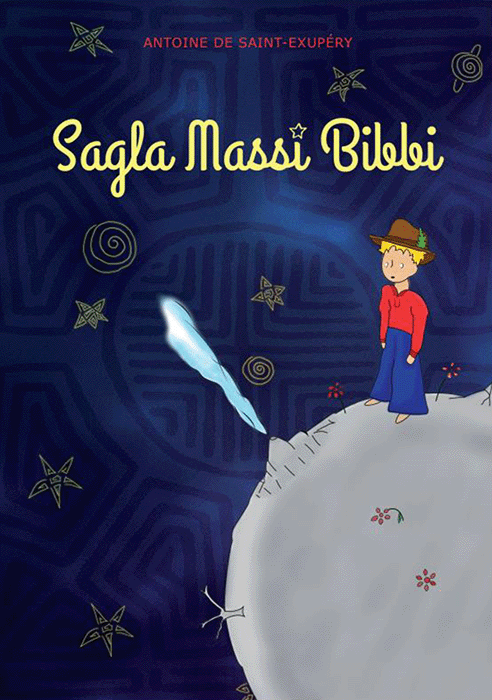
The Little Prince, Antoine de Saint Exupéry’s timeless masterpiece, has reached a historic milestone by becoming the world’s most translated book of fiction, with 600 translations to date!
On June 25, 2024, as part of the project “The Little Prince at the Bedside of the World’s Languages”, the 600th translation of this masterpiece was presented to the National Library of Panama, in Dulegaya, the language of the Indigenous Guna people of Northeastern Panama and Colombia. This event reinforces the role of the Little Prince as a universal work that unites peoples and contributes to the preservation of endangered languages.
Since its first publication in 1943 in New York, this philosophical tale, illustrated by Antoine de Saint Exupéry, has touched readers of all generations and cultures, offering a universal message of love, kindness, and humanity.
Today, with many languages on the brink of extinction, The Little Prince uniquely preserves languages and transmits cultures. Thanks to the passion of translators, this work has been translated into rare languages and endangered dialects, thus contributing to the preservation of the world’s linguistic heritage.
The 600th translation confirms the cultural and social impact of the Little Prince, which transcends borders and becomes a link between peoples. This story is more than a story: it is a celebration of cultural diversity. 1,500 copies of this Dulegaya edition, entitled Sagla Massi Bibbi, were printed in the spring of 2024 by the Panamanian publishing house El Hombre de la Mancha. They will be distributed in schools and libraries in the Guna Yala region as of 2025.
NEW YORK, NY, November 18, 2024 (EZ Newswire) — Pronto Translations, a leading translation service in New York, has been integrating generative AI technology such as ChatGPT into its workflows for the past 18 months to support its translation processes.
Following the initial report issued last April, which detailed common AI errors, continuous enhancements in deploying AI have necessitated an update due to the emergence of further drawbacks that impact AI translation processes. Despite ongoing improvements to AI engines, experiences at Pronto Translations confirm that while AI technologies like ChatGPT can assist with translation efforts, they are not capable of replacing human translators. Effective translation requires a collaborative approach between AI tools and skilled linguists. Below are the 10 most critical reasons identified by Pronto Translations:
Mistranslation Risks: ChatGPT generally excels more than many other machine translation tools in identifying the correct contexts for meanings. However, significant errors have been observed, such as confusing “nuts” meant for vehicle assembly with edible nuts, or misidentifying a washer as a laundry appliance in a car maintenance manual. These errors underscore the risks involved in relying solely on AI for translation.
Fabrication of Information: ChatGPT can occasionally generate inaccurate content, especially when dealing with less familiar or obscure terms and concepts. While it handles well-known information from its training data competently, it struggles in areas where the data is scant or the terms are not widely recognized. In such instances, ChatGPT may make educated guesses, leading to translations that are not only imprecise but also potentially misleading. This is particularly problematic in technical or specialized texts where each term has specific and significant implications.
In the wake of Han Kang’s Nobel Prize in Literature, the Literature Translation Institute of Korea has decided to actively pursue upgrading its translation academy to a graduate school. It will also strive to strengthen the global literary network by increasing exchanges with overseas writers, translators, and publishers.
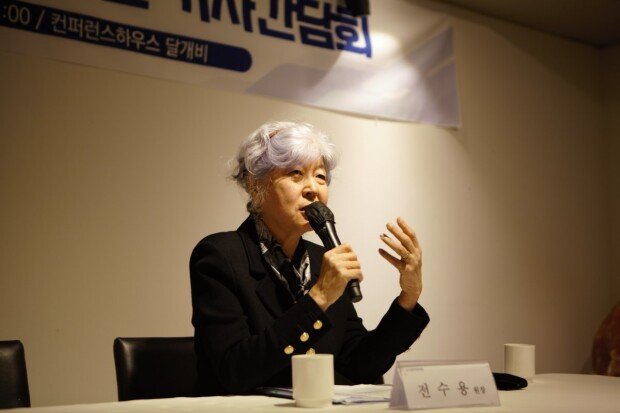
“The Nobel Prize in Literature is not the end, but the beginning,” said Jeon Soo-yong at a press conference on her 100th day at the institute on Monday. “For Korean literature to become world literature, forming international discourse and building a foundation for critique must be strengthened,” she said, emphasizing the need to establish a graduate school of translation.
Currently, the Literature Translation Institute of Korea operates the Translation Academy, a non-degree program for students in seven languages. The plan is to upgrade it to a full-time master’s degree program, aiming to improve the quality of translations and create opportunities for local translators to take on roles in schools and other institutions.
It’s the latest offering from the German tech unicorn
German tech darling DeepL has (finally) launched a voice-to-text service. It’s called DeepL Voice, and it turns audio from live or video conversations into translated text.
DeepL users can now listen to people speaking a language they don’t understand and automatically translate it to one they do — in real-time. The new feature currently supports English, German, Japanese, Korean, Swedish, Dutch, French, Turkish, Polish, Portuguese, Russian, Spanish, and Italian.
What makes the launch of DeepL Voice exciting is that it runs on the same neural networks as the company’s text-to-text offering, which it claims is the “world’s best” AI translator.
As someone who’s just moved to a foreign country, I’m keen to try a voice-to-text translator that actually might work. All the ones I’ve tried so far aren’t real-time — there’s a lag that renders them pretty useless — and the translation quality is pretty poor.
For face-to-face conversations, you can launch DeepL Voice on your mobile and place it between you and the other speaker. It then displays your conversation so each person can follow translations easily on one device.
You can also integrate DeepL Voice into Microsoft Teams and video-conference across language barriers. The translated text appears on a sidebar as captions. It remains to be seen whether DeepL Voice will be available on platforms like Zoom or Google Meet anytime soon.
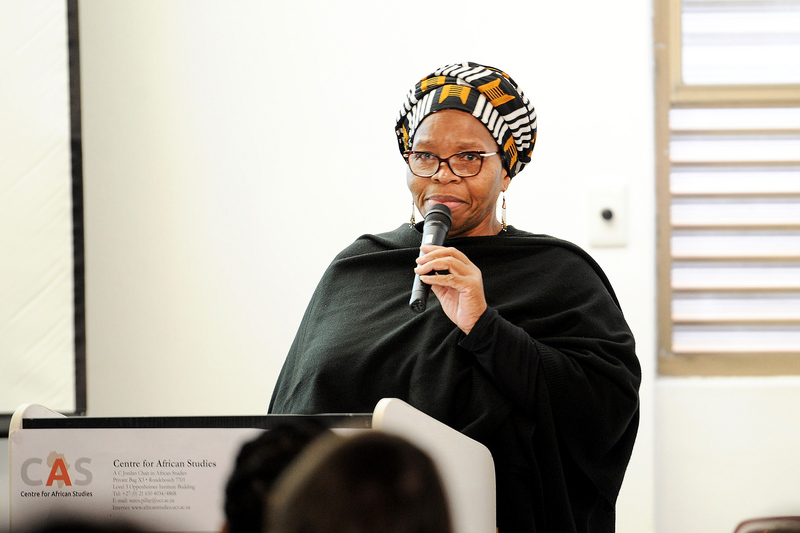
Award-winning writer, poet and translator Professor Makhosazana Xaba used the second annual AC Jordan commemoration lecture to take a stand for women translators, spotlighting the lack of value afforded to their intellectual labours, especially in respect of African languages.
The annual lecture, instituted in 2023 by the University of Cape Town’s (UCT) School of Languages and Literatures and the AC Jordan Chair in Africa Studies, provides a platform for critical reflections and engaging dialogues, highlighting African intellectual histories, scholars and scholarship across the continent, as part of efforts to advance decolonisation efforts at UCT.
The AC Jordan Chair was established at UCT in 1993, named for Professor Archibald Campbell Jordan, an academic pioneer of African scholarship, literature and linguistics, and renowned for his novel Ingqumbo yeminyanya (The Wrath of the Ancestors).
Taking to the stage to deliver her lecture at the end of October, Professor Xaba quickly dispensed with the original title of her speech, “On Translating The Wretched of the Earth into isiZulu: From Challenges and Pleasures to Epiphanies” – reflections on her recent translation into isiZulu of Frantz Fanon’s landmark text, Izimpabanga Zomhlaba (The Wretched of the Earth).
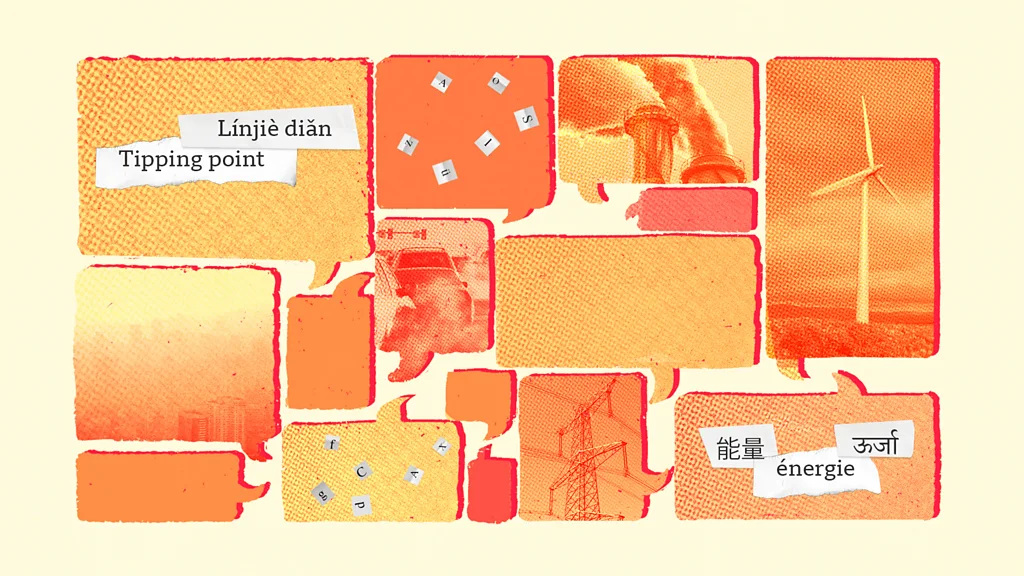
When it comes to solving climate change, every word counts. From the pitfalls of metaphors to the multiple meanings of the word “energy” – this is how translators at global climate negotiations navigate the language of global warming.
“I remember one morning we returned to our hotel at around 4:00am and slept for two hours. Then we were told that the final document was adopted so we had to rush back to the conference to translate the outcome documents,” says Jianjun Chen, a Chinese language translator at the United Nations, based in Geneva.
He is recounting the frantic hours before negotiators reached a deal at the 24th Convention of Parties to the United Nations Framework Convention on Climate Change (UNFCCC) – or COP24 – in Katowice, Poland, in 2018. Chen, who has worked at the UN for 14 years and translated multiple documents from the UN climate talks into Mandarin, isn’t fazed by the long hours or lack of sleep.
This year’s UN climate talks in Baku, Azerbaijan, will be his 13th. As world leaders gather for COP29 in Baku, Chen and 25 other translators are preparing for a slew of new climate vocabulary to enter the discourse – words that will dictate the ways countries and campaigners approach climate action.
The final text is the result of negotiations, sometimes very intense negotiations. So you have to be very careful about the wording – Jianjun Chen
Chen also translated important documents when the landmark Paris Agreement was signed at the UN climate talks in 2015 (COP21), pledging to try to prevent global warming to well below 2C, with a stretch target of a 1.5C limit. (Read more about why 1.5C is a critical threshold in this story by Martha Henriques). “I was called to start working in the middle of the night at 2 or 3am. Since there was always a tight deadline, we didn’t have the luxury to fall asleep,” he recalls.
Translators have raised concerns over Simon & Schuster-owned publisher Veen Bosch & Keuning’s (VBK) “disastrous decision” to use artificial intelligence (AI) to translate some titles into English.
TheBookseller revealed last week that the Utrecht-headquartered publisher is “working on a limited experiment with some Dutch authors for their books to be translated into English language using AI”. It was later reported in the Guardianthat the “project contains less than 10 titles—all commercial fiction”, and does not include any literary books or titles to which English rights would likely be sold at any point. The story was also followed up on Radio 4’s “Today” programme.
The publisher, which was acquired by Simon & Schuster (S&S) earlier this year, explained that this would include “one editing phase, and [that] authors have been asked to give permission for this”.
Although the Dutch publisher is owned by S&S, The Bookseller understands that the two publishers’ editorial decisions remain separate.
Industry figures have voiced their concerns about the potential “reputational damage” of this move, and the inefficiency that AI could introduce into the translation process.
Louise Rogers Lalaurie, who has translated 15 novels from French and is the author of Matisse: The Books (Thames & Hudson/University of Chicago Press), explained that the “end result” of an AI-generated translation can cost “more than a good human translation first time round” due to the time-consuming “post-editing” process.
Veen Bosch & Keuning, the largest publisher in the Netherlands, has confirmed plans to trial the use of artificial intelligence to assist in translation of commercial fiction
A major Dutch publisher plans to trial translating books into English using artificial intelligence.
Veen Bosch & Keuning (VBK) – the largest publisher in the Netherlands, acquired by Simon & Schuster earlier this year – is “using AI to assist in the translation of a limited number of books”, Vanessa van Hofwegen, commercial director at VBK said.
“This project contains less than 10 titles – all commercial fiction. No literary titles will nor shall be used. This is on an experimental basis, and we’re only including books where English rights have not been sold, and we don’t foresee the opportunity to sell English rights of these books in the future,” she added.
“There will be one editing phase, and authors have been asked to give permission for this,” a VBK spokesperson told the Bookseller. “We are not creating books with AI, it all starts and ends with human action.”
The fact that the publisher is planning to use AI translation only for commercial fiction, rather than literary titles, “assumes those books are purely formulaic and don’t contain many creative elements, which is rather insulting to the authors and readers involved”, said Michele Hutchison, who won the 2020 International Booker prize for her translation of Lucas Rijneveld’s The Discomfort of Evening.
“There’s only so far you can get” with machine translation post-editing – the process by which a human translator reviews an AI-generated translation. “The text might be superficially smooth but it is also likely to be very bland,” she added.
In the age of artificial intelligence (AI), foreign language learning can seem like it’s becoming obsolete. Why invest the time and effort to learn another language when technology can do it for you?
There are now translation tools to understand song lyrics, translate websites and to enable automated captions when watching foreign videos and movies. Our phones can instantly translate spoken words.
At the same time, foreign language programs are closing at New Zealand and Australian universities.
But while technology can translate messages, it misses an important component of human communication—the cultural nuances behind the words.
So, while AI translation might bridge language barriers and promote communication because of its accessibility, it’s important to be clear about the benefits and challenges it presents. Merely relying on technology to translate between languages will ultimately lead to misunderstandings and a less rich human experience.
The translation news daily digest is my daily 'signal' to stop work and find out what's going on in the world of translation before heading back into the world at large! It provides a great overview that I could never get on my own.
susan rose (X)
Estados Unidos
You have native languages that can be verified
You can request verification for native languages by completing a simple application that takes only a couple of minutes.
Review native language verification applications submitted by your peers. Reviewing applications can be fun and only takes a few minutes.







 Share an article »
 ProZ.com blog »